04 Apr Total Eclipse of the Sun
As you may have heard, this year marks the 40th Anniversary of the Community Foundation—so, we’ve been all-things-80’s around here!
Ironically, that’s when “Total Eclipse of the Heart” the single by Welsh singer Bonnie Tyler debuted. We had no idea waaay back then that we’d be celebrating a “Total Eclipse of the Sun” in 2024—and apparently, it’s kind of a big deal, especially around these parts of Indiana.
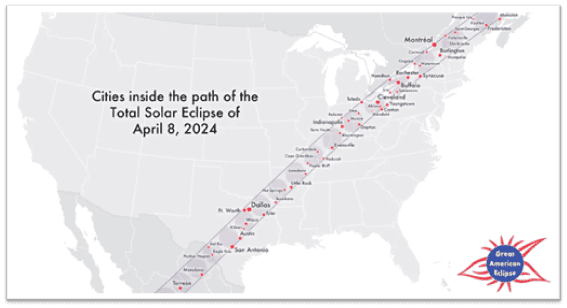
You see, Grant County is in the path of totality. In the 80’s we would have said that was ‘totally tubular’! Can we bring that phrase back in vogue? Anyway, people much smarter than me tell us that being in the path of totality will allow you, and approximately 32 million friends, to experience the moon completely blocking out the sun’s disk. Boom! In the middle of the day, it will be total darkness for nearly 4½ minutes. That’s almost two minutes longer than the Great American Eclipse of 2017.
|
eclipse | noun | i-ˈklips |
As definition #1 from Merriam-Webster states, the moon will totally obstruct the sun, the sky will fall dark, and millions of people will be able to step outside their front doors to see one of the most astonishing astronomical events of their lives. In the Marion area, the window of opportunity to witness this once-in-a-lifetime event will be on Monday, April 8th from 3:08 p.m. to 3:10 p.m. Our fleeting moment will last 2 minutes and 3 seconds and will be accompanied by an almost deafening silence as nature’s noises will come to a halt. This 1-week delayed April Fool’s joke will bring a silence to our usual spring cacophony as even our backyard creatures will be deceived by the false darkness.
Then we won’t see another eclipse like it for 20 years. In 2033, Alaska will get some eclipse action, but other than that, we’ll have to wait for Canada to eclipse us in 2044 and then the rest of the U.S. and South America can celebrate again in 2045.
|
In pondering this monumental time in our life, I noodled on a few things: 1. It’s incredible that we can leverage data and our brilliant, wrinkly brains to know the exact date, time, and location of these miraculous events. 2. We not only know what’s going to happen next week, but we know what’s going to happen 20 years from now. 3. And then, the #2 definition of eclipse from above: a falling into obscurity or decline. |
1. It’s incredible that we can leverage data and our brilliant, wrinkly brains to know the exact date, time, and location of these miraculous events.
You see, we try to make intentional, data-driven decisions at the Community Foundation of Grant County. So, when our Board discovered that $400,000-$500,000 was being deployed annually through scholarship awards, they were pleased. It’s a good thing to help students get an advanced degree, raise their own educational attainment, and build a better quality of life.
However (and this is a big however), when we learn that many students aren’t persisting in college to complete their degrees—what we call ‘debt without diploma’—we get concerned. Then, when we realize that many more students earn the degree and then exit out of Grant County and take their skills and diplomas with them, it becomes more of a cause for concern. After all, shouldn’t that $500,000 be an investment that’s provides a valuable return for Grant County and our economy? That’s when our Board outlined a significant objective in our new strategic plan—Determine how to utilize scholarships as an economic development tool. It’s a lofty goal and a nod to our brilliant, wrinkly-brained Board Members. But it’s going to take a community-wide push to make it happen and we’ll need your help!

2. We not only know what’s going to happen next week, but we know what’s going to happen 20 years from now.
Just like our forecasters can tell us that the next eclipse will take place in America in 2045, we should also be able to predict what impact our scholarship awards will have on our community 20+ years from now. And, if we can’t, or if we can and don’t like the trajectory, we should change that!
Admittedly, we can (and will) do a better job of tracking our student data. But we do know:
1. We are experiencing gaps in the supply of talent with post-secondary credentials.
2. There are barriers preventing high school students and adults from pursuing higher education—and they aren’t all financial.
3. Our region needs more Bachelor-degreed people to meet current and future demand predictions.
4. There are hundreds of people who have started, but not completed degrees.
We need to take this data and intentionally create systems that will create a well-educated, economically-thriving community 20+ years from now—if not sooner.

3. And then, the #2 definition of eclipse from above: a falling into obscurity or decline.
No one wants your community to fall into obscurity or decline. Have you heard the term ‘eclipsed by’? Eclipsed, when used as a verb, refers to “the act of overshadowing or surpassing something or someone”. It’s the idea of one entity overshadowing (pun intended) or dominating another, often resulting in the latter’s diminished visibility or importance. I hereby claim that this will not be us!
We have data. We have passion. We have grit. We have ideas. We have people—amazing people. There is no reason to believe that we’ll be eclipsed by anyone at the intersection of education and economic development in 2045 if we begin to make and execute quality plans today. And we’re starting to do that right now.
First and foremost, we’ve created a new fund called the Boomerang Back Fund. This fund will specifically leverage our scholarship dollars as an economic development tool while helping students complete degrees, reduce debt, and move back home to Grant County. If you believe this activity is a worthy one like we do, donations can be made HERE.
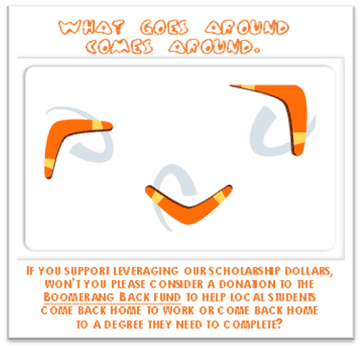
In the meantime, we’re working with our Economic Development Committee and our Scholarship Task Force to develop systems and/or programs that will account for our data today, so we can better plan for where we want our educational attainment rates and their kissin’ cousin, economic development, to be in 10, 15, 20 years from now.
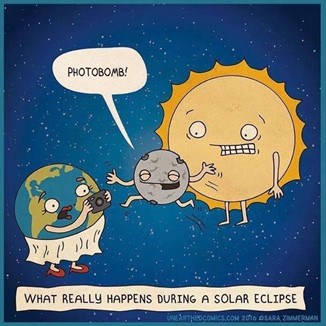
A lot has changed since we were founded 40 years ago. And we’ll be able to say the same thing 20 years from today. However, with a vision and strategy that is targeted and relentlessly pursued, we can hit the bullseye we’re aiming for. ‘What Goes Around Comes Around‘ right? That means our actions have consequences—this tracks with the moon photobombing the sun, boomerangs, and scholarship investments. And just like the eclipse, there may be some dark times, but there’s a bright future ahead. Let’s pursue it together!
No Comments